
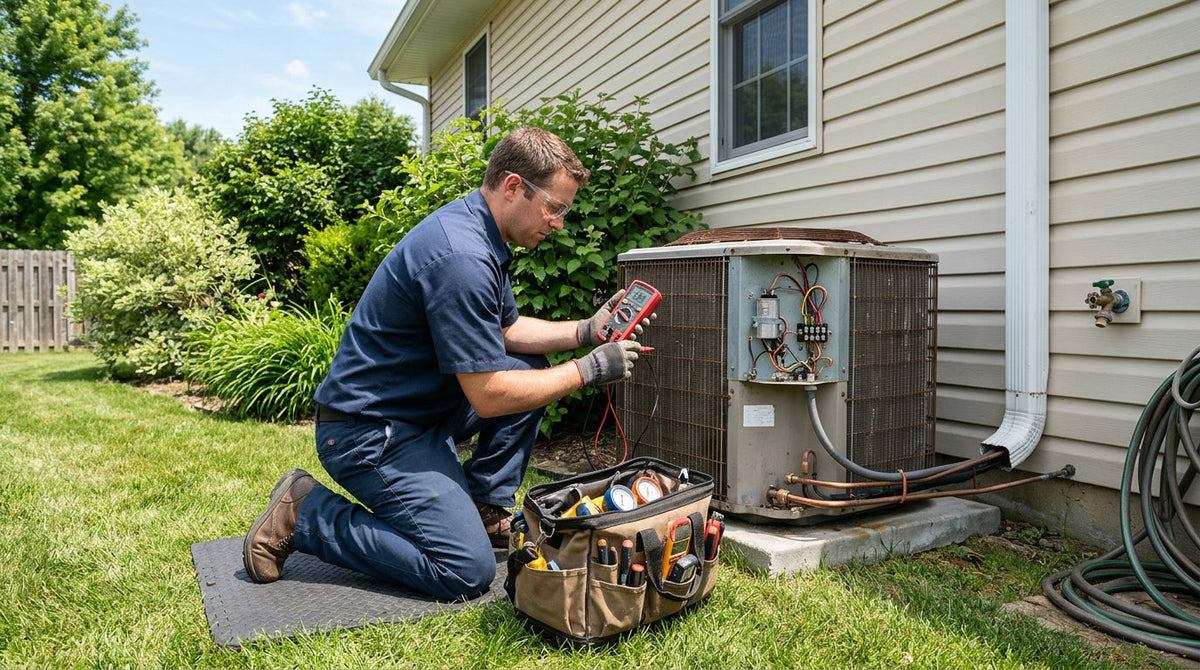
When a customer says the air conditioner is not cooling, the temptation is to walk straight to the condenser with gauges. A better habit is a quick, ordered triage that starts at the thermostat and works outward. Most no-cool calls end at something simple, and gauges are rarely the first tool you need.
1. Start at the thermostat
Is it set to cool, with a setpoint below room temperature? Is the display alive? A blank thermostat points to a loss of 24-volt control power, which sends you to the air handler or furnace rather than outside.
2. Check the indoor unit
Is the blower running? Check the filter, and look for a full secondary drain pan or a tripped condensate float switch. Float switches are wired in series with the control circuit, and a clogged drain is one of the most common reasons the outdoor unit never gets the call. Confirm 24 volts between R and C at the board. A blown low-voltage fuse means something shorted, so find the short before you replace the fuse.
3. Follow the call outside
With the thermostat calling for cooling, measure 24 volts from Y to C at the outdoor unit. If it is missing, the problem is the wiring or a safety switch between the thermostat and the condenser. If it is there, check whether the contactor has pulled in.
4. Look at the outdoor unit
- Line voltage at the disconnect, and the breaker
- The contactor: pitted or burned contacts drop voltage to the compressor
- The run capacitor: a weak or failed capacitor stops the fan or compressor from starting. With the power off, discharge it safely and measure microfarads against its rating
- A condenser coil packed with dirt or debris
5. Only now, check the refrigerant side
If the compressor and fan run, airflow is right and the coils are clean, connect gauges and evaluate the charge with superheat or subcooling, depending on the metering device. By this point you have ruled out the causes that gauges cannot see.
Ten minutes of checks in the right order beats an hour of chasing pressures that were never the problem.
Test yourself with the 24V Thermostat Troubleshooting Quiz.