
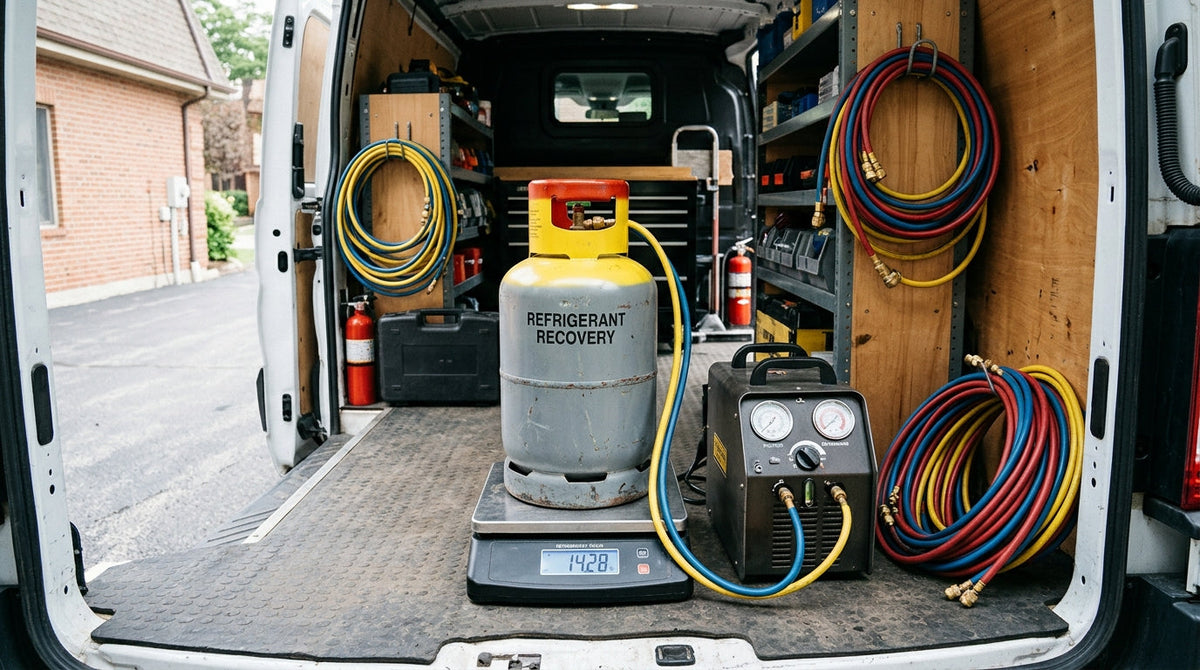
A recovery cylinder looks like the least complicated thing on the truck. It is also the one item that can go from routine to dangerous if you fill it wrong. Almost every rule around recovery cylinders comes back to one fact: liquid refrigerant expands as it warms.
Know it at a glance
Recovery cylinders are painted gray with a yellow top or shoulder. That color scheme marks them as holding recovered refrigerant, so nobody mistakes one for a cylinder of new refrigerant. Label each one with the refrigerant inside, and keep one refrigerant per cylinder. Mixed refrigerants are difficult or impossible to reclaim and may have to be destroyed.
The 80 percent rule
Never fill a recovery cylinder past 80 percent of its capacity. The empty space is not wasted. As the cylinder warms, in the sun or in a hot truck, the liquid expands into it. A cylinder filled completely with liquid has nowhere for that expansion to go, and the pressure can climb fast enough to rupture it.
Fill by weight, not by guesswork. The cylinder's collar is stamped with its water capacity and tare weight. Work out the maximum fill for the refrigerant you are recovering, set the cylinder on a scale and stop before you reach it. Some recovery machines can also use a float switch in a compatible cylinder to shut off automatically.
Before you connect
- Check the retest date stamped on the shoulder, and do not fill a cylinder that is out of date.
- Inspect for dents, corrosion and damaged valves or collars.
- Evacuate a new or empty cylinder first to remove the air.
- For A2L refrigerants such as R-32 and R-454B, use a recovery machine and cylinder rated for A2L use.
Why recovery is not optional
Under Section 608 of the Clean Air Act, intentionally venting refrigerant during service, repair or disposal is prohibited, for the older ozone-depleting refrigerants and their HFC substitutes alike. Small releases during good-faith recovery, such as when connecting hoses, are the narrow exception. Everything else goes into a cylinder.
Recovered refrigerant can go back into the same system or another system with the same owner. If it changes hands, it has to be reclaimed to purity standards by an EPA-certified reclaimer.
Test yourself with the Refrigerant Recovery Quiz.